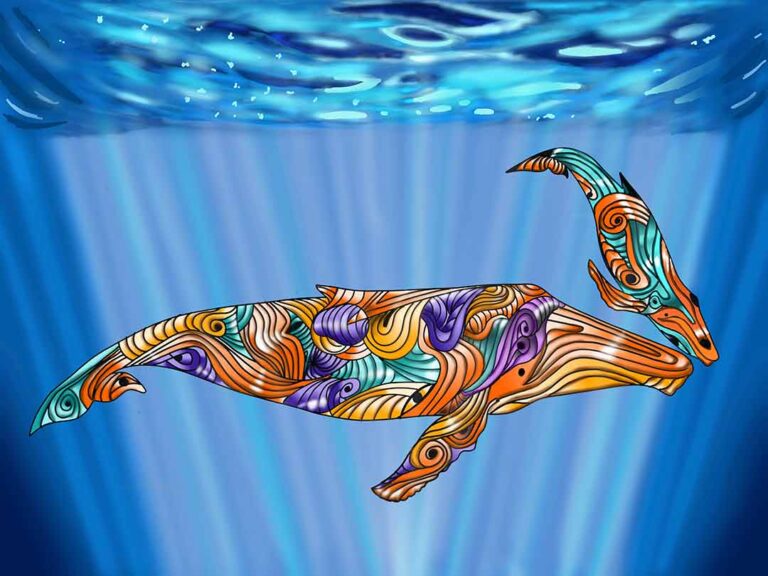
The Tonga Craddle: A Humpback Lullaby
Picture Dimension 19 ¾” x 27 ¼ ”
Picture with frame Dimension 24″ x 36″
Mixed Media – Hand-drawn images are converted into digital art.
Limited Edition Certification
(Only 5 exclusive signed copies are available)
Description
Every winter, the humpback whales return to Tonga.
They travel thousands of miles from the icy feeding grounds of Antarctica to the warm, clear waters around Vava’u and Ha’apai. Here, in the sheltered lagoons between the islands, they mate, give birth, and raise their young before the long journey south again.
In one of those quiet lagoons, a mother rests just below the surface. Beneath her pectoral fin, a newborn calf rises to breathe, then sinks back into her shadow. The calf is only weeks old. It drinks rich milk many times a day and grows quickly, building the strength and blubber it will need to survive the migration.
The mother has not eaten since she left Antarctica. There is no food for humpbacks in these tropical waters. Everything she gives her calf comes from the reserves she built up months ago. So she rests, saves her energy, and keeps watch. Every hour of calm matters.
Above them, the sea is busy. Tonga is one of the few places in the world where people can swim with humpback whales, and visitors now arrive from every corner of the globe for the chance. Boats circle the lagoon. Swimmers slip into the water. For many people, it is a moment that changes how they see the ocean forever.
But for a mother and calf, too much attention comes at a cost. Each time she is approached, she may move away, cutting short her rest or her calf’s nursing. Repeated disturbance means burning energy she cannot replace until she returns to Antarctica. As tourism grows, so does the pressure on these resting places.
Tonga’s humpbacks have already come back from the edge once. Industrial whaling in the last century devastated the Oceania population, and Tonga ended whaling in its own waters in 1978. Their recovery has been slower than humpbacks in other parts of the Pacific, and they still face real threats today: boat strikes, entanglement in fishing gear, ocean noise, plastic pollution, and climate change reshaping the krill-rich waters of Antarctica where they feed.
There is also real hope here. Whale tourism has become an important source of income for Tongan families and communities, giving the whales a living value that whaling never did. Licensed operators, swimmer limits, and approach rules help protect the animals, and responsible guides teach visitors to let the whales choose how close to come. Researchers use photo identification and acoustic recordings to follow individual whales year after year. Tonga has also committed to expanding protection across its ocean waters.
The future of these whales depends on balance. Tourism that respects their quiet hours can support both the people of Tonga and the whales who return each year. Tourism that crowds them out risks the very thing everyone came to see.
In the lagoon, the calf surfaces again, a small puff of breath beside its mother. Soon they will head south together. What they find when they return next winter is up to us.